Last month’s CAPS meeting explored effective institutional tier 2 supports: what processes do we have in place for students who do not master essential standards after our best first instruction, and also how are we extending learning for advanced students who need extensions?
I have been teaching AP English since 2013, so when our speaker, Dr. Luis Cruz asked us to reflect on our extension strategies for advanced and gifted students, I gave myself a mental pat on the back because THIS, this is my wheelhouse. Then…he proceeded to explain what effective extensions are NOT, and I realized I had gotten it wrong. Humbled again. Extension is not: assigning extra work, asking students to teach other students, or *clutches pearls* allowing students to work on assignments from other classes (I am guilty of this one in particular).
Of course, I knew all of this. I’m sure, deep down, we all know this. I’m not suffering from any delusions that I’m somehow extending student learning when I ask my advanced students in the groups to turn and explain concepts to their peers. But it’s easy—in the melee that is trying to get all students to master essential grade level standards—to neglect the needs of the students in our classes who are ready to move on. Ready to go deeper with their learning. We have so many students in our classes whose learning needs are so significant that in the moment, it’s hard to justify spending extra time on those kids who get it. They’re fine. They’ll be fine. Or so we say.
As Dr. Cruz continued his presentation, I found myself thinking less about my students and more about my own children. I’m a mom of three elementary aged children. My son is nine and he is a whiz kid (and I don’t use this phrase lightly). Since he was a baby, learning has been exceptionally easy for him. However, my younger daughters (ages four and six) are more typical in their development. My six year old daughter is still learning how to decode whereas my son read Ready Player One when he was that age. My son—however adept he may be at reading—also happens to be a very reluctant reader. Since daily reading is non-negotiable in our household, it’s a constant battle. So my whiz kid son recently discovered a loophole. He has been offering to read to my daughters in the evening “as long as it counts” for his nightly reading. The tired mom in me says, “Yes. Please—I’ve just spent an entire day teaching teenagers. Please read Junie B. Jones to the girls so that I don’t have to.” As Dr. Cruz spoke, I realized that allowing my son to read a book that has a lexile level of about second grade and having it count as his nightly reading is a twofold denial of opportunity for growth. (1) He is not stretching himself as a reader by reading Junie B. Jones and (2) My daughters are not benefiting from listening to the reading of an adult whose cadences and inflections properly model effective reading, which is something I–the English teacher and passionate reader–could do expertly for them. In addition, my son mumbles when he reads out loud, which is kind of just a side note, but also quite important. Why am I telling you this? There’s a saying that a parent is the child’s first teacher, and in these moments, I fear I might be failing to provide my own children with the tools they need to optimize their learning. How can I—a veteran teacher—justify allowing that in my own household? In the same way that I shouldn’t be expecting my (albeit gifted) nine year old son to model effective reading for my daughters, we also shouldn’t be expecting the advanced students in our classes to teach or assess the struggling students among them. It’s simply unfair.
To understand what effective extension strategies look like on Hart’s campus, I turned to our resident scientists, Kathryn Smith and Nick Gravel. They’ll need to forgive me when they read my descriptions of their lessons because science was always my least favorite subject in school. Picture this: eyes glazing over. But I’ll do my best.
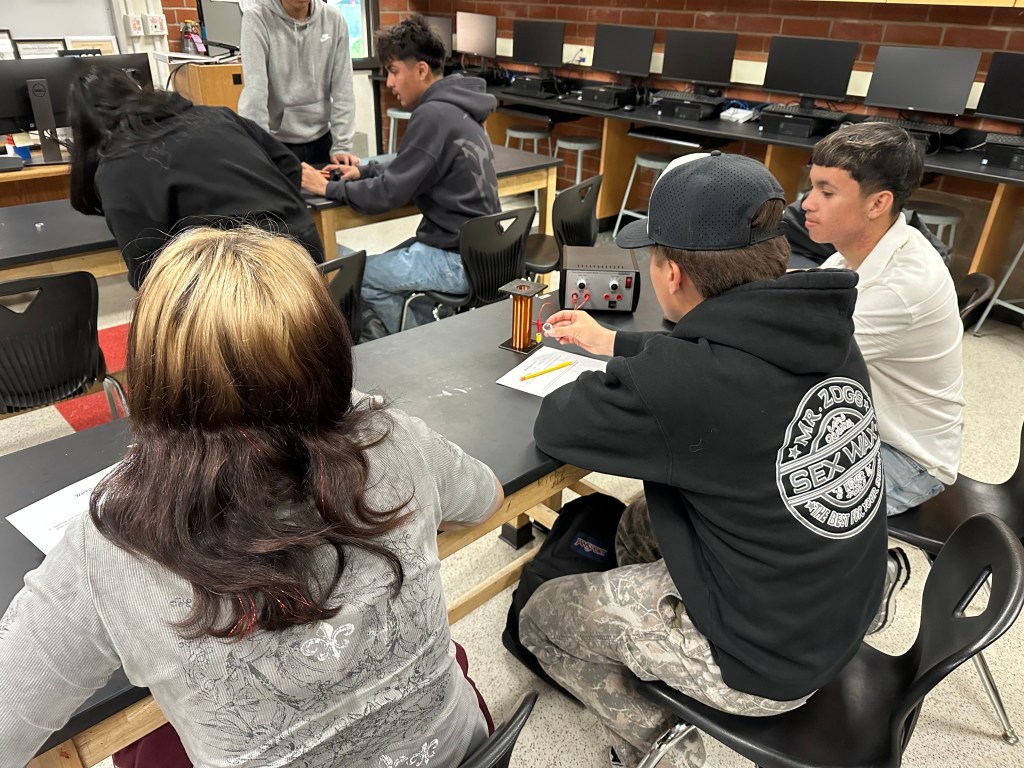
If you’ve taught at Hart for any length of time, you know that Nick Gravel’s students adore him, which is one of the reasons I chose to observe his class for this blog. On Friday, January 30, Nick had his regular Physics B class studying electric currents with classroom activities centered around the goal of creating magnet fields using a solenoid. *Shoutout to Kathryn Smith for helping me write that description accurately.* The instructions for the activity were to draw the circuit they created, describe what they saw, and explain how it worked, which was an application of what they had learned after several days of lecture. As I sat in Nick’s class, it was apparent to me that there were several students in the class who should really be stretching themselves in AP Physics. For these students, Nick had several extension strategies in place. For one, the activity itself had modifications and extensions built in–students were allowed to explore at their own pace. The advanced students, on several occasions, called Nick over to ask questions that helped them understand the concepts they were learning beyond the scope of the lesson. One student in particular asked several questions that tapped into the WHY of the concept: “Why does it only work for the inside of the magnet?” and “What other factors would affect magnetism?” Additionally, Nick had a pile of electric motors sitting on top of his desk that students had access to if they were ready to move on. These motors used the same scientific principles as the solenoids, but this time to make something move rather than to create a magnetic field. Nick’s lesson highlighted an important principle that I took away from our last CAPS meeting with Dr. Cruz: an important component of MTSS involves considerations for what we do with students who master essential standards quickly. In the same way we must support students who are not mastering essential content, we need to also be providing extensions for students who are ready to move on. This looks like moving students up the Blooms taxonomy pyramid and into the higher levels of the depth of knowledge chart. Nick had already asked students to explain and describe; these are level two skills. Nick’s choice to allow students to make connections, ask why, and compare results moved them up into higher levels of learning.
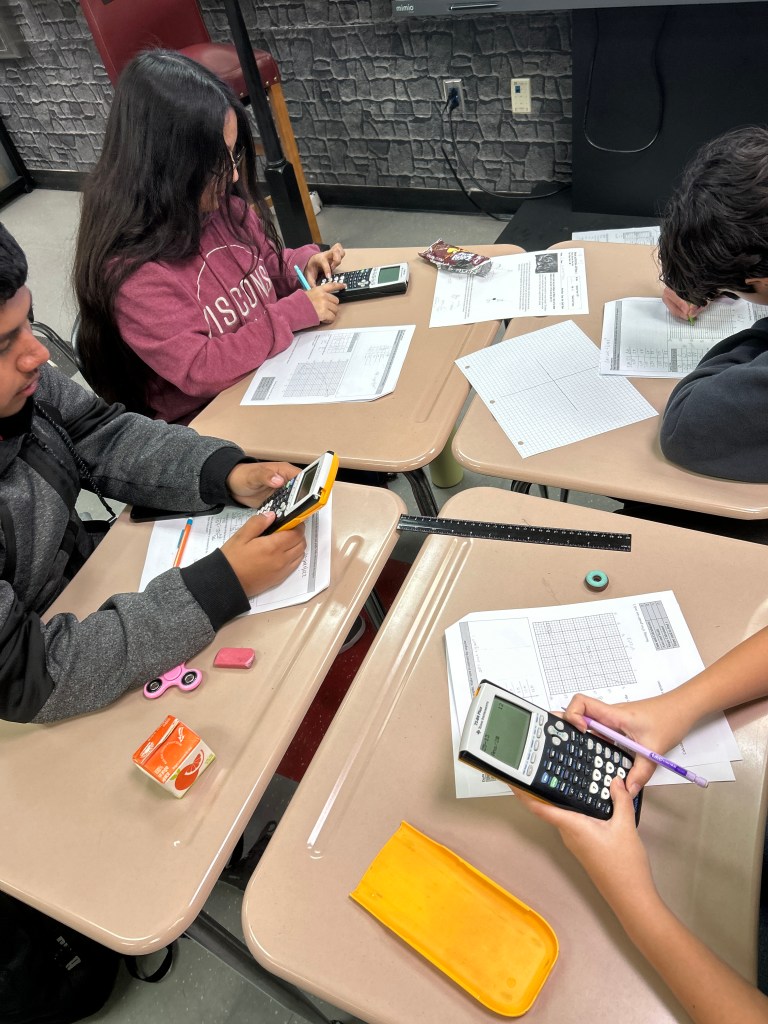
Similarly, when I arrived at Kathryn’s class on January 9, I immediately noticed that she (having written what looked to me like hieroglyphics on her board) was having students work within higher levels of thinking. Students were making decisions about which formula to use to measure torque. From there, they had to make decisions about the procedures they needed to use to find numbers to plug into their formulas. As she was teaching, I was wondering how Kathryn would extend learning since the entire lesson seemed to already incorporate the highest levels of Blooms. But if you know Kathryn, you know she always has a plan. Kathryn’s classroom is gamified, which means she has built-in incentives for students who master course content. For students who are ready to move on, Kathryn has skill-aligned AP practice FRQs that students can complete for what she calls quest prizes. The FRQs require students to apply the same skills from the lesson, but this time without step-by-step guidance, which is something the students need to be able to do in order to perform well on the AP exam. I asked one of my journalism students later in the day what Ms. Smith’s quest prizes entail, and she enthusiastically explained them to me, which shows me that there is buy-in. Moving from a guided lesson to an incentivized independent application of learning is again an example of moving students into higher levels of DOK and up Bloom’s pyramid. While Kathryn does have her students strategically grouped by skill level for peer support opportunities, she does not count this as an extension.
The most complex levels of learning on the Bloom’s Taxonomy pyramid are evaluate and create. I used to ask my son to evaluate the quality of books he finished and then write Goodreads reviews, but at some point between baseball practice and everyday life, we stopped doing this. If you’ve been a parent for any length of time you know that the best laid plans often go awry. I know I need to get back to this practice with him, but it involves time. The same is true for our classrooms. We all want our students to learn at their highest levels, but time is always an issue, and when we have to make sacrifices, we tend to scrape from the top. What I learned from observing Kathryn and Nick is that extensions do not have to take up a tremendous amount of time, just a bit of strategic thinking and a little bit of an Education 101 refresher.
 hartguidingcoalition.blog
Leave a comment